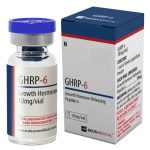
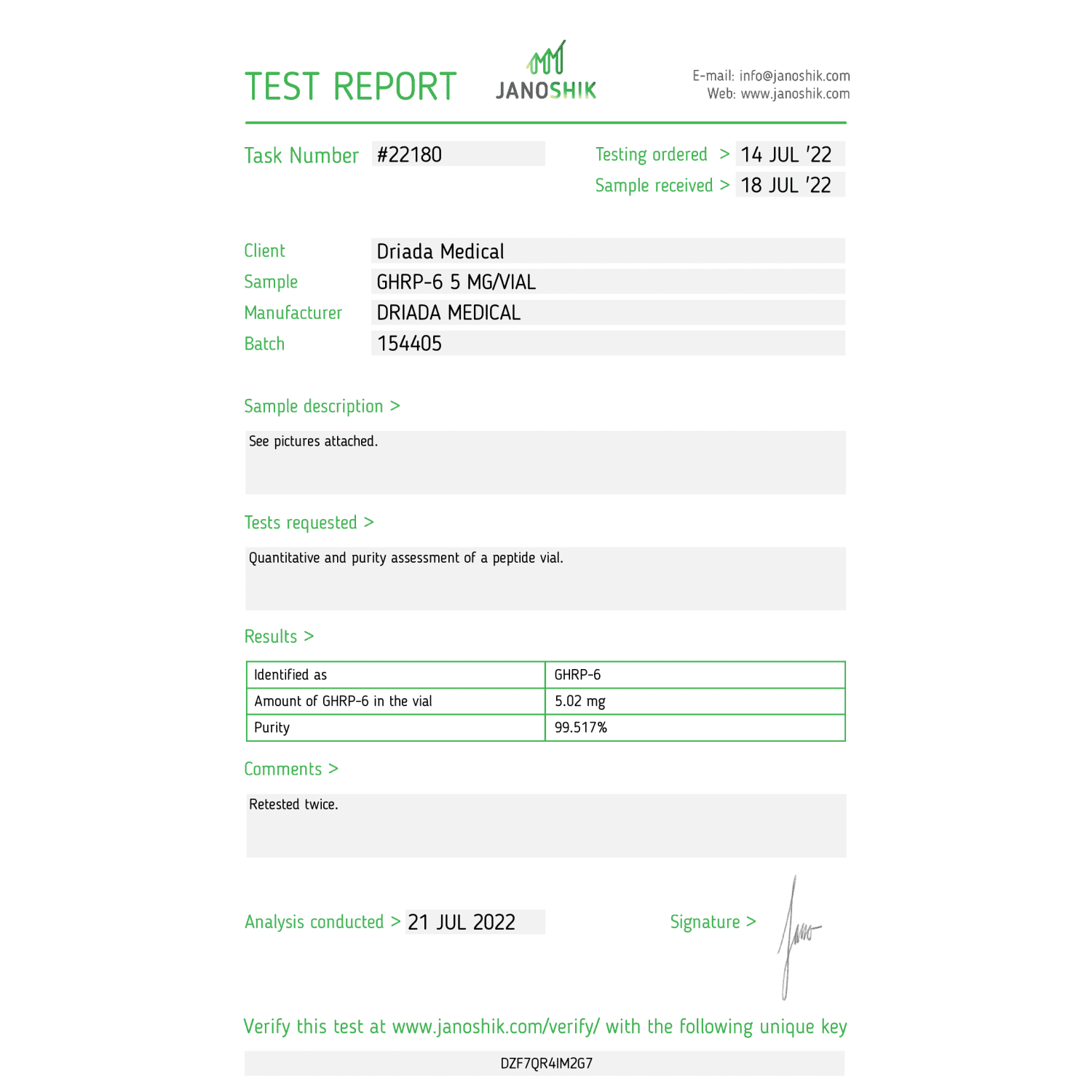
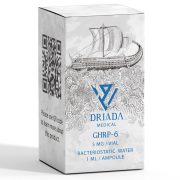
GHRP-6 5mg
GHRP-6 is a peptide that stimulates growth hormone secretion and was developed to treat growth hormone deficiency. It is similar to GHRP-2 but slightly less potent. When used in combination with GHRP-2, it produces a synergistic effect. Both GHRP-6 and GHRP-2 have a significant impact on appetite, with GHRP-6 being slightly more effective. However, this increase in appetite diminishes after the second week of use. GHRP-6 can be administered subcutaneously, orally, sublingually, or most commonly intramuscularly. Injectable routes offer optimal bioavailability due to the small size of the molecules, which allows them to enter the bloodstream before being destroyed by digestive enzymes.
GHRP Group
GHRP stands for Growth Hormone Releasing Peptide, a group of drugs that stimulate the secretion of growth hormone. These drugs are ghrelin receptor agonists, activating ghrelin receptors and stimulating the pituitary gland to secrete growth hormone. Originally developed as a cost-effective alternative to growth hormone treatment, GHRP drugs have shown significant therapeutic potential. They are used for various purposes, such as increasing muscle mass, improving the appearance of the skin, and promoting the healing process after injuries.
Mechanism of action
GHRP peptides mimic the hormone ghrelin, which is produced by stomach cells during fasting. By activating the ghrelin receptor (GHS-R1a), these peptides increase growth hormone levels by stimulating the pituitary gland. The release of growth hormone by GHRP mimics the effect of ghrelin induced by fasting.
Stimulating growth hormone secretion with GHRP drugs has numerous positive effects on anabolic processes. Increased growth hormone levels lead to higher levels of the protein IGF-1, which has beneficial properties such as tendon strengthening, neuroprotection, and immune system enhancement.
Effects of increased growth hormone and IGF-1
Growth hormone plays a crucial role in regulating body composition, particularly its lipolytic effect. Growth hormone supplementation reduces body fat mass and increases lean mass. It also promotes lipolysis by reducing the action of lipogenic enzymes and increasing the production of other lipolytic hormones. However, the effects of GHRP drugs on adipose tissue may differ, as they have demonstrated independent effects on fat storage.
Growth hormone is an anabolic agent for skeletal muscle and tendon connective tissue, providing a stronger structure for muscle and tendon fibers to transmit force to bones. Athletes often use growth hormone to treat muscle and tendon injuries. Growth hormone also improves bone strength by increasing intestinal calcium absorption and serum vitamin D concentrations.
A highly valued effect of growth hormone is its anabolic effect on muscle. Reduced production of growth hormone and IGF-1 leads to decreased muscle mass and protein synthesis. Growth hormone promotes glucose and amino acid uptake, stimulating protein synthesis indirectly via IGF-1 and directly.
Cardioprotective properties
The GHRP family of compounds exhibits cardioprotective properties, independent of growth hormone levels. These properties include improved cardiac performance, increased ejection fraction, reduced blood pressure, and alleviation of ventricular dysfunction and cardiac fibrosis. GHRP drugs prevent cardiomyocyte death and aid in the restoration of critical cardiac function during ischemic episodes. These properties make GHRPs a promising class of cardioprotective agents.
Cytoprotective properties
GHRP drugs also possess cytoprotective properties, protecting cells from damage. They reduce inflammation and prevent necrosis and apoptosis in various organs. Hepatoprotective effects have been observed, and these peptides can prevent stress-induced damage to the gastric mucosa.
Anti-inflammatory properties
The GHRP group of peptides has anti-inflammatory effects, as demonstrated by the reduction of inflammation in diseased joints. They protect cells from damage caused by reactive oxygen species, enhancing antioxidant protection.
Use and side effects
GHRP drugs must be administered several times a day to maintain elevated growth hormone levels. The optimal dose ranges from 100 to 200 mcg per injection. It is important to note that GHRP drugs (with the exception of Ipamorelin) can increase prolactin and cortisol levels and may initially increase appetite.
GHRP-6
GHRP-6 is a moderately potent peptide compared to other GHRP compounds. It increases cortisol and prolactin levels and has a significant effect on appetite. It is commonly used to increase muscle mass, but may interfere with fat loss goals.
GHRP-2
GHRP-2 is a more potent peptide than GHRP-6. It increases cortisol and prolactin levels and has a significant effect on appetite. It is preferred by athletes during mass-gaining phases.
Hexarelin
Hexarelin is the most potent growth hormone stimulant among the GHRP compounds. It increases cortisol and prolactin levels to the upper limits of normal. It is known for its powerful effects, but it also increases appetite.
Ipamorelin
Ipamorelin is a GHRP compound with similar growth hormone release effects to GHRP-6, but without increasing cortisol or prolactin levels. It does not induce a significant increase in appetite.
Table of hormonal effects and increased appetite:
A table is provided to summarize the effects of various hormones and their impact on appetite when using GHRP compounds.
Use:
GHRP compounds should be injected several times a day, preferably before meals, to maintain elevated growth hormone levels. The optimal dose ranges from 100 to 200 mcg per injection.
Conservation:
The prepared solution can be stored in the refrigerator at 2-8 degrees Celsius for approximately 21 days, or longer if bacteriostatic water is used for reconstitution.




Reviews
There are no reviews yet.