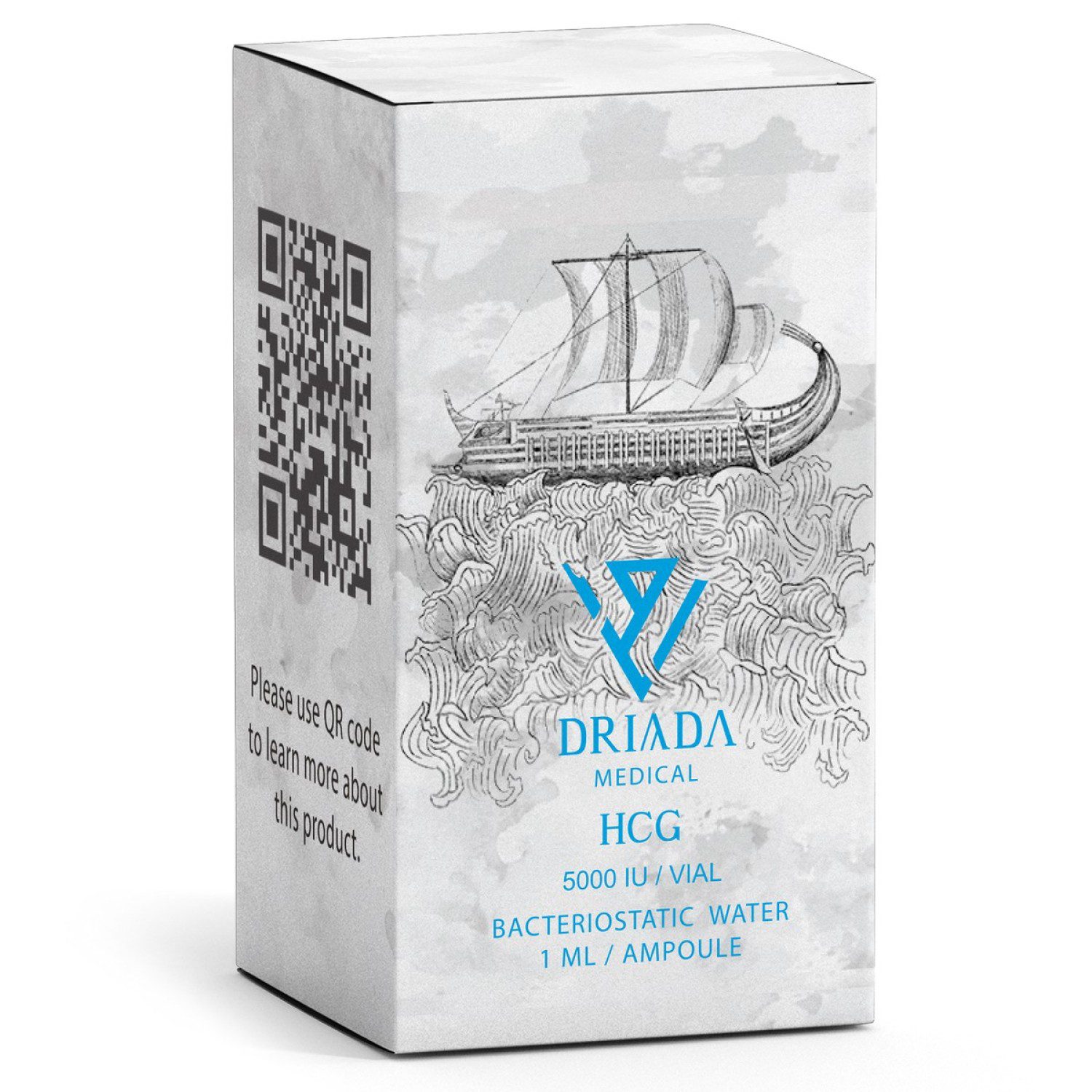
HCG-5000iu (Human chorionic gonadotropin)
HCG (human chorionic gonadotropin) is a polypeptide hormone containing an alpha subunit similar to the alpha components of luteinizing hormone (LH), follicle-stimulating hormone (FSH), and thyroid-stimulating hormone (TSH), and a beta subunit with a different amino acid sequence. This means that HCG exerts almost identical effects to LH in activating the production of gonadal steroid hormones for the production of androgens and progesterone and influencing the development of male secondary sexual characteristics and the normal menstrual cycle in women, but has weak FSH activity. It supports the corpus luteum during pregnancy.
HCG and other gonadotropins are synthesized in the body and are not xenobiotics, so allergic reactions are rare. Human chorionic gonadotropin (HCG) is a hormone produced by the placenta during pregnancy and then excreted unchanged in the urine, where it is extracted and purified to produce drugs. It is an FDA-approved drug with proven efficacy.
Purpose of use
There are several key issues that require the use of HCG as a tool. Let’s consider the most interesting one for athletes and those undergoing testosterone replacement therapy (TRT). During a steroid cycle or testosterone replacement therapy, the use of exogenous testosterone suppresses the release of LH from the brain. Exogenous testosterone disrupts the hypothalamic-pituitary-gonadal axis (HPTA), and the testes no longer receive LH. This is known to most of us simply as “shutdown” or “HPTA suppression” or testicular atrophy.
Men will see their testicles shrink over time and experience constant pain along the way, with sperm production virtually halted. The duration of this process appears to vary in men, with younger men appearing to last longer, while middle-aged and older men see it occur more quickly. Scientists believe this depends on the number of receptors on the Leydig cells, but there is no research to support this.
In the body, gonadotropin levels are regulated by a feedback mechanism in the hypothalamic-pituitary-testicular axis. Gonadotropins are produced in the pituitary gland and normally stimulate the testicles, but their deficiency causes testicular atrophy. To prevent testicular atrophy, it is very important to support testicular function during the cycle/TRT. HCG treatment is a key tool for this.
Suppression of luteinizing hormone, which maintains (stimulates) normal testicular function after a 12-16 week cycle, causes a 90% decrease in Leydig cell volume and 98% decrease in testosterone secretion, but Leydig cells make up only about 5% of the testicular mass, so testicular size is not an indicator of the level of suppression, since volume can change very little (only 5%) with almost completely suppressed Leydig cell function.
How to use
There are dozens of protocols for using HCG, but these schemes are recognized as optimal because they allow for the preservation of testicular function and promote the most complete recovery after the AAS cycle: in long cycles lasting several months, gonadotropin is used as described above continuously, 3-5 weeks on, 1-2 weeks off (a break of at least 1-2 weeks is necessary to avoid desensitization).
If hCG was not used during the long and heavy cycle, it should be included in post-cycle therapy, but only at the beginning of PCT. The most commonly used protocol, according to William Llewellyn, is supported by clinical studies. It is recommended to use hCG as part of post-cycle therapy at doses of 2000 IU, every other day for 20 days to restart the HPTA. However, high doses (2000-5000 IU) for more than 20 days are not recommended.
If a man injects testosterone once a week, the most common protocol involves using 250 IU of HCG two days before and one day before the next testosterone injection. The theory here is that serum testosterone levels are approximately at midlife, and injecting HCG on these days increases natural production, creating a bridge to the next testosterone injection.
Additionally, there is the hypothesis that large amounts of hCG may desensitize the Leydig cell receptors. Furthermore, according to Michael Scally, MD, and studies, testicular desensitization does not occur if the dose does not exceed 500 IU per injection and the hCG is injected less than 3 times a week.
Additionally, high doses cause a rapid increase in estrogen, so to avoid this, aromatase inhibitors will not work, as intratesticular aromatization will occur, so use tamoxifen or divide the weekly HCG dose into smaller portions.
Effects
- Increased endogenous testosterone levels
- Increased sperm production
- Increased libido and mood
- Restoring fertility
- Preservation of testicular activity during the cycle
- Possibility of restoring endogenous testosterone production and fertility after steroid abuse
Side effects
- Water retention (mild)
- Abdominal or pelvic pain
- Less common or rare
- Abdominal or pelvic pain (severe)
- Water retention (moderate or severe)
- Decreased amount of urine
- Feeling of indigestion
- Nausea, vomiting, or diarrhea (continuous or severe)
- Pelvic pain (severe)
- Shortness of breath
- Swelling of the feet or legs
Drug profile
- The half-life of HCG is several hours, but the effect lasts 5-6 days and slowly diminishes.
- Frequency of intake: 1 time every 3-7 days
How to prepare a solution
To prepare a solution for injection, take a syringe already containing a diluent and inject it into a bottle containing a lyophilized powder. Tilt the bottle so that the needle touches the wall of the bottle. Avoid injecting the diluent directly into the lyophilized powder. The solvent should flow slowly down the wall of the bottle (do not fill it all at once; take your time). Once all the diluent has been added to the peptide bottle, mix gently (but without shaking or jiggling the bottle) until the lyophilized powder has dissolved and the liquid becomes clear. The drug is now ready for use.
Never mix one peptide with another in the same syringe. This risks destroying the fragile peptide molecules.
Contraindications
- Prostate gland cancer
- Testicular cancer
- Pituitary gland tumor
- Estrogen-dependent tumor growth
- Puberty at an earlier age than expected
- Blockage of a blood vessel by a blood clot
- Ovarian hyperstimulation syndrome, an abnormal enlargement of the ovaries
Injections
- Injections can be given subcutaneously and intramuscularly with an insulin syringe.
- Disinfect the rubber stopper of the medicine and the injection site with alcohol.
- Draw the medicine into a syringe and inject it slowly.
Conservation
- Store away from light
- Store in the refrigerator (2-8°C)
- Do not freeze
- After reconstitution, the solution can be stored for up to 28 days at no more than 25°C.
- After dissolution in the included solvent, the solution should be administered immediately.
- Keep out of reach of children
- Do not use after the expiration date
Unmixed/unconstituted HCG powder should be stored in the refrigerator, but can be stored for more than a month in a dark place, below +25 degrees Celsius, without degradation.
HCG usually comes with a saline solvent, which is only suitable for use when administered as a single dose (usually in fertility treatment). If you are using multiple doses of HCG for TRT, the saline solvent provided MUST be discarded and replaced with bacteriostatic saline. Bacteriostatic saline contains a preservative that inhibits bacterial growth, thus extending the shelf life of HCG.




Reviews
There are no reviews yet.